
Wuji
Let's start at the beginning...

Substack is a new thing for me and I am intrigued as to how this blogging experiment will go.
You will no doubt have noticed that this is a Substack about all things tai chi related. If I have a level of knowledge and something of value to offer the world, then my tai chi and other martial arts teaching is probably it….Don’t hold out for much more than that :)
One thing that is always striking about tai chi is that as a subject matter, it is incredibly vast. As with any topic of depth, the more you know, the more you realise that you don’t know. So, as a student of the subject myself, I am excited to learn alongside my readers as we explore many avenues along our tai chi journey together.
No doubt there will be dead ends and some random diversions as we go but the question at the start of such a large undertaking is, where do we begin!?
Well, that’s an easy one, we start at the beginning of course…
The ubiquitous tai chi symbol will be at least familiar to everyone, even if the meaning is not always as well known.
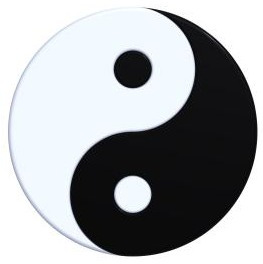
It represents Yin and Yang, the two opposing forces in the universe from which everything originates.
The practice of tai chi is an interplay of Yin and Yang, as is everything that exists in the universe. However, we are starting at the beginning, so what existed before Yin and Yang?
Wuji
Where Yin and Yang are represented by the black and white circle, each side containing the seed of its polar opposite, Wuji is represented by an empty circle.
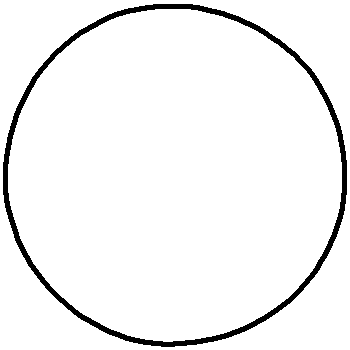
The concept of Wuji means ‘without limit’, ‘without an opposite’, ‘nothingness’. It can be seen as a single point in space, without polarity.
Wuji can be thought of as what existed before the creation of the universe (whether you believe our universe was created by the Big Bang, a God, or Pangu emerging from a cosmic egg, or any other creation event, I’ll leave that up to you!).
When we think about what our ever expanding universe may be expanding into, after we’ve got over the brain ache that naturally proceeds such a thought, we can say that this is also Wuji.
In the Tao Te Ching, the Taoist classic, attributed to Lao Tzu in the 6th Century BCE, Chapter 42 states:
One gave birth to two
Two gave birth to three
Three gave birth to ten thousand things.
From this we can see that one (Wuji) gave birth to two (Yin/Yang), from there everything else in the known universe was created.
(We will be exploring this more in an upcoming article).
Wuji in Tai Chi Practice
In terms of tai chi practice, Wuji is the state that we want to start with and return to at the beginning and end of a practice of a tai chi (or qigong) sequence.
A feeling of emptiness, centredness, our qi settled and calm, our mind clear. A moment of pure potential with the weight evenly balanced. Upon completing our sequence, this it the state that we return to.
All too often I see students practice tai chi and spend no time at all even attempting to attain these feelings before starting their movements, or at the end of the form. Remember, you need Wuji before Taiji, and then return back to Wuji.
The Wuji stance in tai chi is one of perfect simplicity, yet is also difficult to attain, as is often the way in the practice of an esoteric art.
You don’t need to be a tai chi practitioner to attempt the following:
Stand with feet shoulder width apart
Feel as though the top of the head is being gently pulled upwards by a piece of string
Tuck the chin in slightly so that the neck is straight
The tongue touches the roof of the mouth
Breathe naturally
Let the arms hang naturally by your sides, gently pulling the shoulders downwards
Allow your upper back to round very very slightly, feeling the chest sink a little
Let the stomach and chest move as you breathe
Relax the whole of the back
Bend the knees very slightly to soften your stance
The hips relax and allow the pelvis to settle, the tailbone pointing downwards
Relax the ankles
Feel the weight sinking down through the balls of the feet
The more you relax, the more you will feel heavier and more rooted to the ground through the feet.
Calm and empty the mind
The great thing about taijiquan practice is that it can bring the cosmological/philosophical concepts to life and we can learn to feel them in our bodies.
Wuji in Our Everyday Life
I want this Substack to be about how the teachings of taiji can be applied to our everyday lives, even for those who choose not to practice taijiquan. (Although I hope I can inspire everyone to at least try some practice).
Wuji as a concept does not have to be confined to the realms of philosophy, cosmology, or martial arts. We can easily use it to help improve our day-to-day lives.
How many times have you rushed headlong into something that you’ve later regretted? Could be anything from a new job to an argument with a partner, I think it’s safe to say that we’ve all been there. Would a moment of calm, emptiness, quiet, peace, calm in our minds help us to make a wiser and possibly more intuitive choice? There are so many situations where I think that trying to find a moment of unbiased inner calm and quiet could have tremendous advantages.
I also think that in our day-to-day life, Wuji demonstrates our untapped, limitless potential. Before we begin something, whether that’s a conversation, a work task, a business, a relationship, travel… whatever it is, we have unlimited potential to make it as great as it can be. It’s usually ourselves that gets in the way of our own success, complicating matters with our hasty decisions and chattering minds.
As I am writing this blog post it is Jan 1st 2025, I don’t make resolutions but I do like to start the year as I mean to go on, which does include writing plenty here on Substack, but also I think adding a little bit more Wuji into my life, perhaps you could join me as well, and let me know how you get on.
Thanks Mark - that's really useful. Looking forward to reading more.